
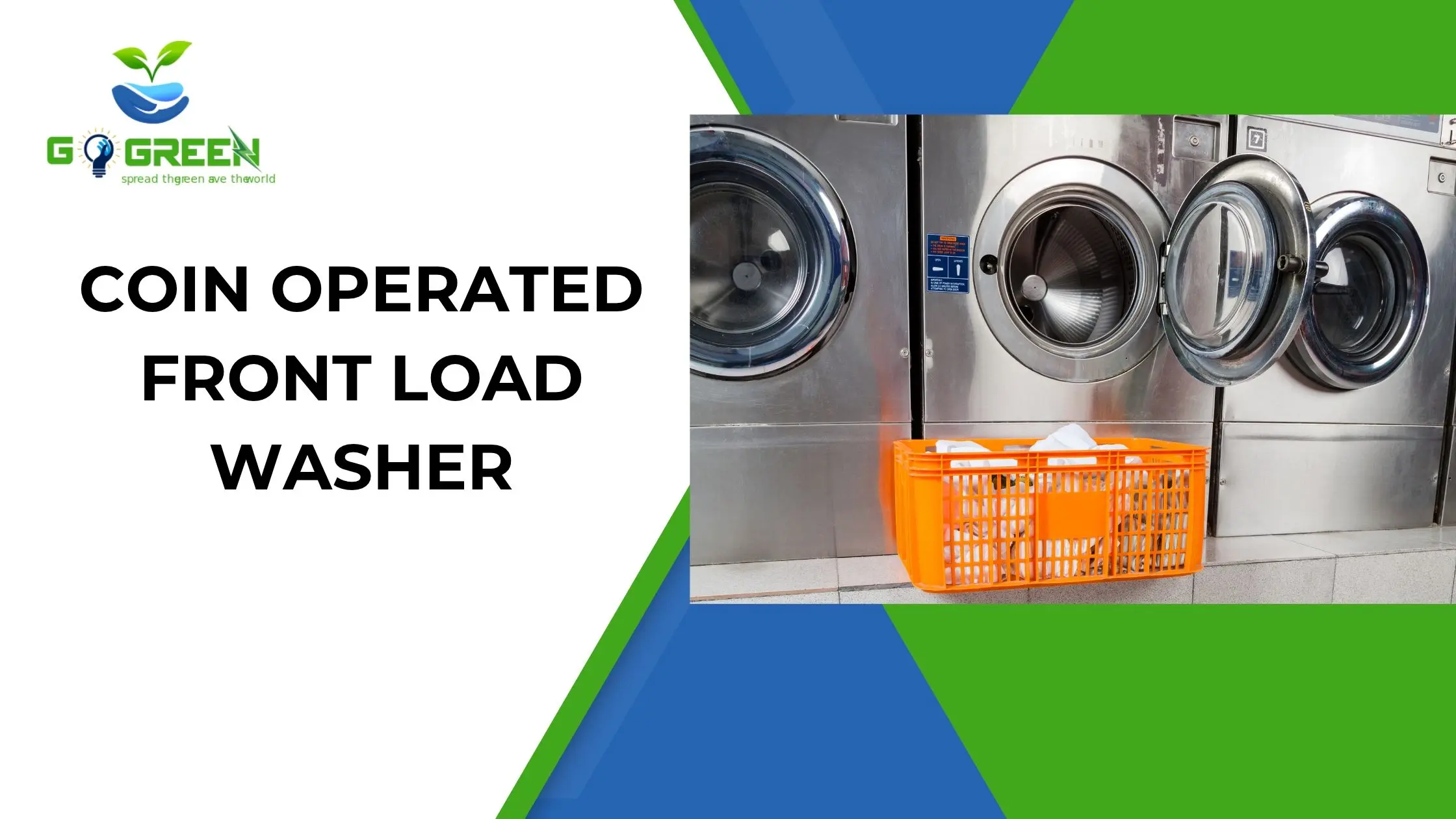
Managing a shared laundry room in an apartment building, labour accommodation, or residential tower requires more than installing a few washing machines. The equipment must handle repeated use, serve multiple residents, manage payment efficiently, and keep operating expenses under control.
This is why front-load coin-operated washing machines are a practical option for many shared laundry facilities in Dubai. They combine automated payment systems with washing equipment designed for convenient, self-service use. Property managers can provide residents with access to laundry facilities without having to operate a traditional staffed laundry counter.
However, not every front-load washer is suitable for a shared environment. Drum capacity, commercial-duty components, coin payment compatibility, water consumption, cycle duration, and maintenance requirements all influence how well a machine performs.
In this guide, we explain what makes a good coin-operated front-load washer, which specifications to compare, how to choose the right capacity, and what building managers should consider before purchasing laundry equipment in Dubai.
What Are the Best Coin Operated Front Load Washers for Shared Laundry Facilities?
The best coin operated front load washers for shared laundry facilities are machines that combine suitable drum capacity, commercial-use durability, reliable payment controls, efficient water consumption, and easy maintenance. For apartments and staff accommodation, 8–12 kg machines are useful starting points, although the ideal capacity depends on occupancy and daily laundry demand.
When selecting equipment, prioritise:
- Commercial suitability and expected daily usage.
- Front-load drum capacity.
- Compatible coin payment mechanisms.
- Reasonable wash-cycle duration.
- Water and energy efficiency.
- Availability of replacement parts.
- Local installation and maintenance support.
A suitable machine should accommodate the facility’s actual laundry demand rather than simply offer the largest capacity or lowest purchase price.
Why Choose Front Load Coin Operated Washing Machines for Shared Laundry Facilities?
Front-load machines are designed with a horizontal drum and a front-facing loading door. Clothes are placed inside the drum, which rotates during washing to clean the laundry.
When combined with a payment mechanism, the machine becomes a self-service washing solution. Residents or customers insert the required payment, select an available programme, and start their wash cycle.
For shared properties, this arrangement offers several practical benefits.
1. Efficient Water Consumption
Front-load washing machines generally use less water than many conventional top-load models because they do not need to fill the entire drum with water.
This can be useful in properties where several machines operate throughout the day. Lower water consumption per suitable load can help control operational costs.
Actual consumption varies by model, programme, load size, and operating conditions. Always request the manufacturer’s water consumption specifications before purchasing.
2. Better Use of Available Space
Many front-load machines can be installed next to each other or stacked with compatible dryers.
This is particularly useful in high-rise buildings, apartments, and labour accommodation where dedicated laundry rooms may have limited floor space.
A properly planned arrangement allows property managers to install multiple machines without unnecessarily restricting movement or access.
3. Convenient Loading and Unloading
The front-facing door makes it easier for users to load and remove clothes.
Residents can monitor the washing process through the door, while the horizontal drum design supports different washing programmes.
4. Suitable for Repeated Shared Usage
A commercial-grade front load washing machine may be designed for more frequent operation than a standard household appliance.
However, front loading alone does not guarantee commercial durability. Buyers should confirm the machine’s intended duty cycle, component specifications, warranty, and manufacturer recommendations.
5. Easier Integration with Dryers
Front-load washers are commonly available in configurations that can be paired with compatible dryers.
This makes it easier to plan a complete washer and dryer arrangement, particularly when the property wants to offer both washing and drying services.
What Makes a Front Load Washer Suitable for Coin-Operated Laundry?
A standard front-load washing machine does not automatically support paid operation. It needs a compatible payment and control arrangement that allows the machine to operate only after the required payment is received.
A coin-operated washing machine generally includes the following components:
Washing unit: The main machine responsible for washing clothes.
Coin acceptor: Recognises supported coins or tokens and validates payment.
Payment control system: Communicates with the machine to authorise the wash cycle.
User control panel: Allows customers to select the available washing programme.
Door locking mechanism: Keeps the door secured during the washing process.
Control electronics: Manage the washing programme and operating sequence.
Before purchasing, confirm that the payment system is compatible with the selected washer. Retrofitting an ordinary domestic machine may require additional controls and manufacturer approval.
For a shared facility, the payment arrangement should also be simple enough for residents and visitors to understand without requiring constant assistance.
Which Washing Machine Capacity Is Best for Shared Laundry Facilities?
The correct capacity depends on the number of users, average laundry loads, and peak usage periods.
For shared laundry rooms, choosing a machine based only on building occupancy can result in either unnecessary investment or insufficient washing capacity.
Here is a practical capacity comparison:
| Machine Capacity | Suitable Applications | Typical Consideration |
|---|---|---|
| 6–7 kg | Small residential facilities | Lower-volume laundry requirements |
| 8 kg | Apartments and small hostels | Everyday household laundry |
| 10 kg | Staff accommodation and medium properties | Larger laundry loads |
| 12 kg | Labour accommodation and busy facilities | Higher shared demand |
| 15 kg and above | Commercial laundry environments | Larger loads and specialised requirements |
These are indicative applications, not fixed capacity standards.
8 kg Front Load Washing Machines
An 8 kg machine can be a practical option for apartment laundry rooms and smaller shared facilities.
It offers enough capacity for many everyday household laundry loads without requiring the space associated with larger equipment.
10 kg Front Load Washing Machines
A 10 kg washer can suit medium-sized residential properties and staff accommodation.
It provides additional capacity when residents frequently wash bedding, towels, workwear, and everyday clothing.
12 kg Front Load Washing Machines
A 12 kg front-load machine can be useful for facilities with heavier demand.
For example, a labour accommodation building with several hundred residents may need multiple machines with larger drums to manage peak laundry periods.
The number of machines should still be calculated according to simultaneous demand. One large washer may not be as convenient as several smaller machines when many residents need to wash clothes at the same time.
Front Load vs Top Load: Which Is Better for Shared Laundry?
Both front loaders and top loaders can be used in laundry facilities, but their designs and operating characteristics are different.
| Comparison | Front Load | Top Load |
|---|---|---|
| Loading method | Front-facing door | Top-facing door |
| Water usage | Generally lower in comparable models | Often higher, depending on design |
| Space planning | Can be stacked with compatible dryers | Usually requires accessible top clearance |
| Loading convenience | Requires bending to access the drum | No need to open a front-facing door |
| Shared facility suitability | Good commercial options available | Suitable options also available |
| Dryer integration | Easier with compatible stacking systems | More limited stacking possibilities |
| Commercial availability | Available in different commercial capacities | Available in different capacities |
Why Front Loaders Are Often Preferred
Front loaders are particularly useful when the laundry room has limited floor space or requires a washer-and-dryer arrangement.
Their water efficiency can also be attractive for facilities with frequent washing requirements.
Top loaders may still be appropriate where users prefer their loading style or the available machine specifications better suit the facility.
The decision should be based on the actual operating environment rather than assuming one design is always superior.
Important Features to Check Before Buying a Coin Operated Front Load Washer
A machine’s advertised capacity and price do not tell the complete story. Shared facilities need equipment that can handle repeated operation and provide a straightforward user experience.
Here are the specifications worth checking.
1. Commercial-Use Compatibility
Confirm whether the equipment is intended for commercial laundry or domestic use.
Industrial washers and commercial washing machines are not interchangeable with every household model. Their construction, expected workload, control systems, and maintenance requirements can differ considerably.
Ask the supplier for the recommended number of daily cycles and any duty-cycle limitations.
2. Coin Payment Compatibility
Check whether the washer has an integrated coin system or requires an external payment controller.
For Dubai facilities, confirm:
- Supported payment denominations.
- Compatibility with UAE currency.
- Programmable payment amounts.
- Token compatibility, if required.
- Coin rejection and refund procedures.
- Availability of replacement payment components.
A coin vending washing machine should be tested before the facility opens to residents.
3. Washing Programmes
Different users have different laundry requirements.
Look for programmes suitable for everyday clothes, delicate fabrics, heavier clothing, and bedding.
A quick wash option can also be useful when residents need shorter washing times.
However, actual cycle duration depends on the selected programme, temperature, load, and machine specifications.
4. Drum and Motor Construction
Repeated use places additional demands on the machine.
Ask about drum material, motor type, bearings, door construction, and other components that influence durability.
Do not assume that a larger machine automatically has a longer lifespan.
5. Energy and Water Efficiency
Energy consumption and water consumption influence the long-term cost of operating shared laundry facilities.
Request technical specifications showing water usage and electricity consumption for representative programmes.
Compare machines using similar cycle conditions and capacities rather than relying on broad efficiency claims.
6. Maintenance Accessibility
Machines in shared laundry rooms should be easy to inspect and service.
Check whether technicians can access filters, drainage components, coin mechanisms, and control systems without dismantling unnecessary parts.
This can reduce service time and help keep the laundry operation running.
How to Plan a Coin-Operated Laundry Room in Dubai
Selecting the machines is only one part of the project. The room itself needs to support safe and convenient operation.
A well-planned self-service laundry facility should provide enough space for loading, unloading, machine servicing, and movement between equipment.
Step 1: Estimate the Number of Users
Start with the number of residents or customers who are expected to use the facility.
For example, a residential building with 80 apartments may have a different usage pattern from staff accommodation with 250 residents.
Consider actual occupancy rather than the maximum number of people the property could accommodate.
Step 2: Estimate Daily Laundry Demand
Estimate how frequently users are likely to wash clothes.
Consider:
- Average laundry loads per resident.
- Number of residents using the facility.
- Peak evening and weekend demand.
- Expected washing duration.
- Availability of external laundry services.
These figures help determine the number of machines required.
Step 3: Measure the Available Space
Measure the room before ordering equipment.
Account for:
- Machine width, depth, and height.
- Door-opening clearance.
- Access for loading and unloading.
- Maintenance access.
- Water supply and drainage.
- Electrical connections.
- Ventilation and dryer requirements.
- Safe movement around equipment.
Do not plan the layout using machine dimensions alone.
Step 4: Decide on the Payment Arrangement
Determine whether residents will use coins, tokens, or another supported payment arrangement.
A coin-operated system is straightforward, but property managers should consider how coins will be collected, counted, and secured.
For larger facilities, the management process matters as much as the payment hardware.
Step 5: Plan Washing and Drying Capacity
If users are expected to dry their clothes in the same facility, include suitable dryers.
A common planning mistake is installing several high-capacity washers but too few dryers.
This creates a queue after washing and reduces the convenience of the facility.
Step 6: Arrange Installation and Testing
Before opening the laundry room, test every machine.
Check water connections, drainage, electrical supply, door locking, payment acceptance, programme selection, and wash operation.
Provide simple operating instructions so that first-time users can operate the machines correctly.
Should You Install Separate Coin-Operated Washers and Dryers?
For most shared laundry environments, separate washers and dryers offer greater flexibility than relying on a single combination appliance.
A separate arrangement allows users to start another laundry load while their previous load is drying.
| Factor | Separate Washer and Dryer | Combined Washer-Dryer |
|---|---|---|
| Simultaneous operation | Possible | Usually one process at a time |
| Space requirement | Higher unless stacked | Generally lower |
| Laundry throughput | Can be higher | May be slower |
| Maintenance | Individual machines | Single combined appliance |
| Capacity planning | Separate capacities | Shared capacity constraints |
| Suitability | Busy shared facilities | Smaller facilities with limited space |
For a busy laundry facility, separate machines can support more users throughout the day.
If floor space is limited, a compatible stacked washer-dryer configuration can provide a useful alternative.
The best choice depends on the property’s expected laundry loads and available space.
What Are the Benefits of Coin-Operated Laundry Facilities for Property Owners?
A coin-operated laundry arrangement can help residential and accommodation properties provide an additional facility without operating a conventional staffed laundry service.
Pay-Per-Use Convenience
Residents pay when they use the washing machine instead of requiring property management to provide free laundry for everyone.
Reduced Staff Involvement
An automated payment arrangement reduces the need for someone to collect payment for each wash or supervise every cycle.
Better Use of Shared Space
A dedicated laundry room provides residents with access to washing facilities without requiring individual machines in every accommodation unit.
Additional Revenue Opportunity
Depending on the property agreement and operating costs, property owners may generate revenue from paid laundry cycles.
Flexible Capacity Planning
Building managers can add machines as occupancy and usage increase, provided the room infrastructure supports expansion.
For a coin-operated laundry business in UAE, these benefits can support a practical self-service model. However, profitability depends on machine utilisation, payment rates, maintenance, utilities, and other operating expenses.
What Factors Affect the Cost of Coin-Operated Front Load Washers?
There is no universal price for every machine. The final washing machine price depends on its capacity, construction, payment mechanism, features, and intended usage.
The main cost factors include:
| Cost Factor | Effect on Purchase Cost |
|---|---|
| Drum capacity | Larger machines generally cost more |
| Commercial specifications | Heavy-duty components may increase upfront cost |
| Coin mechanism | Integrated or external payment systems affect pricing |
| Control system | Programmable controls may add cost |
| Brand and construction | Materials and specifications influence price |
| Installation | Plumbing and electrical work may be additional |
| Warranty | Coverage and service arrangements influence value |
| Dryer integration | Additional equipment increases project investment |
When requesting a quotation, ask the supplier to separate equipment cost, payment components, installation, delivery, and additional accessories.
This makes supplier comparisons more accurate.
Common Mistakes to Avoid When Buying Front Load Coin-Operated Washers
Even a good machine can become an expensive purchase if it is not suitable for the facility.
Avoid these common mistakes:
1. Choosing domestic machines for heavy shared use: Household models may not be designed for frequent operation by multiple users.
2. Ignoring the payment system: A washing machine that cannot communicate reliably with its coin mechanism can create operational problems.
3. Buying the wrong capacity: A small drum may require more cycles, while an oversized machine may remain underutilised.
4. Installing too few machines: This creates long waiting times during busy periods.
5. Ignoring dryer capacity: Washing and drying demand should be planned together.
6. Overlooking room infrastructure: Insufficient drainage, electrical capacity, and ventilation can delay installation.
7. Comparing only purchase prices: Warranty, replacement parts, service, and installation should also be evaluated.
8. Failing to check the lifespan and service requirements: Ask for the recommended maintenance schedule and expected operating conditions.
Expert Tips for Choosing the Best Coin Operated Front Load Washer
If you are planning a new shared laundry facility or replacing older machines, these recommendations can help you make a better purchasing decision.
Prioritise Actual Daily Usage
Do not purchase equipment simply because it has the highest capacity.
Estimate the expected number of daily laundry loads and choose a suitable combination of machine sizes.
Check the Payment Mechanism Separately
The coin system should be treated as an essential equipment component.
Ask whether the payment unit can be replaced independently if it develops a fault.
Compare Water and Energy Consumption Per Load
A machine with a higher purchase price may offer lower operating expenses.
Compare manufacturer specifications and estimate the cost of running the machine under your expected conditions.
Select Equipment with Accessible Spare Parts
A machine with a long life depends on more than its original construction. The availability of replacement components and qualified technicians also matters.
Consider Future Expansion
If the property may add more residents, choose a laundry room layout that allows additional machines to be installed later.
Make the System User-Friendly
Residents should be able to understand the payment instructions, programme selection, and machine operation without needing assistance for every wash.
Choose a Supplier That Understands Shared Facilities
A supplier should understand the practical requirements of apartments, labour accommodation, and commercial laundry environments rather than simply offering a product catalogue.
Why Choose a Dedicated Coin-Operated Laundry Solution for Dubai Properties?
Dubai has a wide range of residential towers, apartments, hostels, labour accommodation facilities, and managed properties. Each has different laundry requirements.
A small apartment building may need a few compact machines, while a large accommodation property may require multiple front loaders, dryers, and a dedicated laundry room.
A suitable laundry solution should consider the number of users, expected daily cycles, payment preferences, available space, and ongoing service requirements.
For property owners and laundry operators, selecting compatible equipment from the beginning can help avoid unnecessary replacement costs and operational interruptions.
Key Takeaways
- Coin-operated front-load washers are suitable for shared laundry facilities in apartments, residential towers, hostels, and labour accommodation.
- Front-load machines generally offer good water efficiency and can be paired with compatible dryers.
- 8 kg, 10 kg, and 12 kg machines are useful capacity options for different facility requirements.
- Commercial suitability should be confirmed rather than assumed from the front-load design.
- A reliable coin acceptor and payment controller are essential for self-service operation.
- Machine quantity should be based on occupancy, daily laundry loads, and peak demand.
- Separate washers and dryers can improve throughput in busy facilities.
- Installation, drainage, electrical requirements, warranty, and maintenance should be included in the purchasing decision.
- The right equipment should balance purchase price, durability, water and energy consumption, and long-term operating costs.
Conclusion
Choosing the best coin operated front load washer for a shared laundry facility requires more than comparing machine prices or selecting a particular capacity. The equipment must suit the number of users, handle the expected workload, support a reliable payment system, and remain practical to maintain.
For apartment owners, building management companies, labour accommodation operators, and laundry business owners in Dubai, a properly planned setup can provide residents with convenient self-service laundry while making effective use of available space.
Gogreen Electronics provides coin-operated washing machines, dryers, and commercial laundry equipment for shared laundry facilities in Dubai and across the UAE. Whether you are setting up a new laundry room or upgrading existing equipment, the right configuration should be based on your property’s occupancy, available space, and expected daily laundry demand.
Planning a shared laundry facility in Dubai? Contact Gogreen Electronics to discuss your requirements, explore suitable coin-operated front-load washing machines and dryers, and request a quotation for your property. Get equipment recommendations that match your facility’s capacity, usage requirements, and budget.
Frequently Asked Questions
1. What is a coin operated front load washer?
A coin operated front load washer is a front-loading washing machine equipped with a payment mechanism. Users insert the required coins or tokens to activate the machine and run their selected washing programme. It is commonly used in apartments, hostels, staff accommodation, and self-service laundry facilities.
2. Are front load coin-operated washing machines suitable for apartments in Dubai?
Yes. They are suitable for shared apartment laundry rooms where residents need access to washing facilities. Their front-loading design also allows compatible dryers to be stacked, helping property managers make better use of limited space.
3. What capacity is best for shared laundry facilities?
An 8 kg machine may suit smaller facilities, while 10 kg and 12 kg machines can be useful for properties with higher laundry demand. The correct capacity depends on the number of users, average laundry loads, and peak operating periods.
4. Can a normal front load washing machine be converted into a coin-operated washer?
Some compatible models can be integrated with external payment controllers. However, compatibility depends on the manufacturer’s control system and electrical specifications. Always obtain supplier or manufacturer confirmation before attempting a conversion.
5. Are front load washers more water-efficient than top load washers?
Many front-load models use less water than conventional top-load machines because of their horizontal drum design. However, consumption varies by model, capacity, and programme. Compare the manufacturer’s water consumption figures before purchasing.
6. Do coin-operated front load washers require a separate coin acceptor?
Not always. Some models have an integrated payment system, while others use an external coin acceptor or payment controller. Confirm the complete payment configuration before ordering.
7. Should I install a dryer with a coin-operated washing machine?
A dryer is useful when residents need a complete washing and drying facility. For busy shared environments, separate washers and dryers can improve laundry throughput because washing and drying can happen simultaneously.
8. How many coin-operated washing machines does a labour accommodation facility need?
The number depends on resident occupancy, average washing frequency, machine capacity, cycle duration, and peak demand. For larger facilities, multiple machines are generally more practical than relying on a single high-capacity washer.
9. What maintenance do coin-operated front load washers require?
Regular maintenance includes cleaning the detergent drawer, inspecting door seals, cleaning filters, checking drainage, inspecting hoses, and testing the payment mechanism. Commercial-use machines should follow the manufacturer’s recommended maintenance schedule.
10. What should I check before buying coin-op